
 JP Nagar,
Bangalore
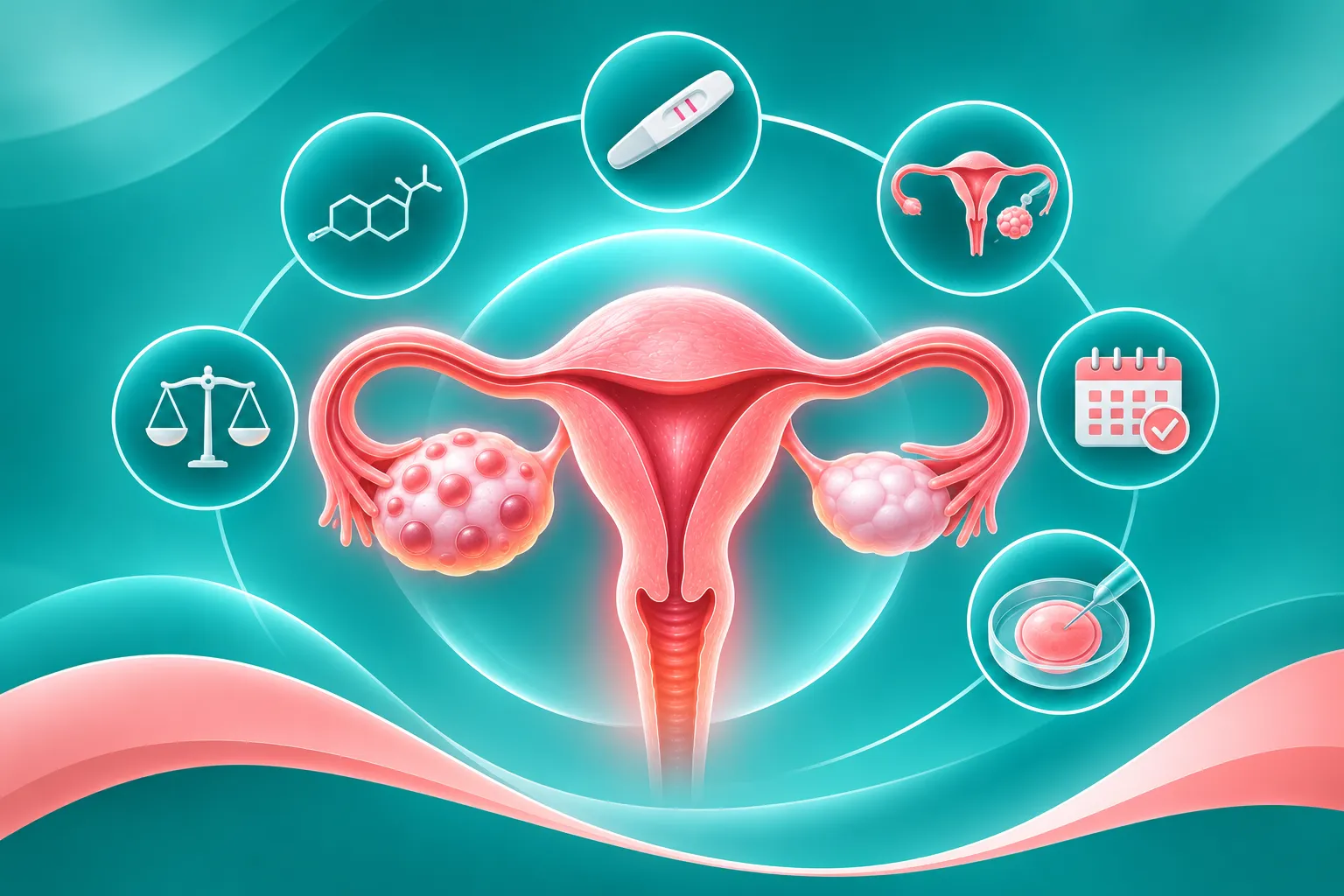
Personalised fertility care to understand irregular ovulation, identify other factors affecting conception and choose the most appropriate path towards pregnancy.
- Individual PCOS Assessment
- Monitored Ovulation Care
- IUI and IVF When Appropriate
- Preconception Health Support
PCOS Can Affect Ovulation, but Pregnancy Is Often Possible
Polycystic ovary syndrome, commonly called PCOS, is a hormonal and metabolic condition that can affect menstrual cycles, ovulation and fertility. Some women with PCOS ovulate infrequently or do not ovulate regularly, making it harder to predict the fertile window and conceive naturally.
Having PCOS does not automatically mean that you are infertile. Many women with PCOS conceive naturally or with appropriate lifestyle support, ovulation treatment, IUI or IVF. The right approach depends on whether PCOS is the only fertility factor or whether age, sperm quality, fallopian-tube health, endometriosis or another condition also needs attention.
Dr. Manjunath offers a structured PCOS and infertility evaluation in Bangalore, followed by an individualised plan designed to use the least complex effective treatment wherever appropriate.
PCOS at a glance
| Ovulation | PCOS can cause irregular or absent ovulation. |
|---|---|
| Ovarian appearance | Not every person with PCOS has ovarian cysts. |
| Diagnosis | An ultrasound alone does not confirm PCOS. |
| Fertility evaluation | Both partners may need evaluation before fertility treatment begins. |
| Treatment plan | Treatment is personalised; there is no single plan that suits everyone. |
What Is PCOS and How Can It Affect Fertility?
PCOS involves a combination of hormonal, ovarian and metabolic features. Higher androgen activity and disrupted hormonal signalling can interfere with the growth and release of an egg. When ovulation is irregular, there are fewer predictable opportunities for fertilisation.
PCOS may affect fertility by:
- Causing infrequent, irregular or absent ovulation
- Making the fertile window difficult to identify
- Affecting the development and release of an egg
- Coexisting with insulin resistance or other metabolic concerns
- Increasing the need for monitored fertility treatment in some patients
PCOS may be one part of the fertility picture. A complete evaluation can help identify additional factors such as blocked fallopian tubes, fibroids, endometriosis, reduced ovarian reserve with advancing age or male-factor infertility.
Important clarification: The follicles seen on a PCOS ultrasound are not the same as harmful ovarian cysts. Some women who meet the diagnostic criteria do not have polycystic ovarian morphology, and some women with a polycystic ovarian appearance do not have PCOS.
Common Signs and Symptoms
PCOS symptoms vary and can change over time. Consider speaking with a fertility specialist if you experience:
- Menstrual cycles that are consistently irregular, widely spaced or absent
- Difficulty identifying ovulation
- Difficulty conceiving despite regular unprotected intercourse
- Excess facial or body hair
- Acne or oily skin
- Hair thinning or female-pattern hair loss
- Unexplained weight changes or difficulty managing weight
- Darkened or thickened skin in body folds
- A previous diagnosis of insulin resistance, prediabetes or type 2 diabetes
- Recurrent heavy bleeding after long gaps between periods
- Anxiety, low mood, poor body image or emotional distress related to PCOS
Seek prompt medical advice for very heavy bleeding, severe pelvic pain, fainting, a positive pregnancy test with pain or bleeding, or any sudden or concerning symptom.
When Should You See a Fertility Specialist?
You may benefit from an earlier fertility consultation if:
- Your periods are absent or very irregular
- You already know that you have PCOS and are planning pregnancy
- You are under 35 and have not conceived after 12 months of regular unprotected intercourse
- You are 35 or older and have not conceived after 6 months
- You are over 40 and would like to conceive
- You have a history of pelvic surgery, endometriosis, recurrent pregnancy loss or tubal disease
- Your partner has known or suspected fertility concerns
- You would like preconception guidance before trying for pregnancy
These time frames are general guidance. Irregular or absent ovulation is a reason to seek advice sooner rather than waiting for the usual infertility interval.
Schedule a PCOS Fertility ConsultationHow PCOS Is Diagnosed
PCOS is diagnosed after reviewing symptoms, menstrual history, clinical findings and appropriate tests while excluding other conditions that can cause similar symptoms.
Diagnostic features in adults
In adults, the diagnosis generally requires at least two of the following features after other causes have been considered:
- Irregular or absent ovulation, often reflected by irregular menstrual cycles
- Clinical or biochemical evidence of higher androgen activity
- Polycystic ovarian morphology on ultrasound, or an appropriate alternative assessment in selected adults under current guidance
What your evaluation may include
- Detailed menstrual, medical, medication and family history
- Physical assessment, blood pressure and signs of androgen excess
- Pelvic ultrasound when appropriate
- Hormonal tests selected for your symptoms and cycle pattern
- Blood-glucose assessment and lipid profile when clinically indicated
- Thyroid, prolactin or other tests to exclude alternative causes
Diagnostic note: AMH can be helpful in selected adult diagnostic pathways, but it should not be used as a stand-alone test. PCOS diagnosis in adolescents requires special criteria and should not rely on ultrasound or AMH alone.
Fertility Evaluation for PCOS
Even when irregular ovulation appears to be the main concern, fertility evaluation should consider both partners and all major reproductive factors.
For the female partner
- Menstrual and ovulation assessment
- Pelvic ultrasound to assess the ovaries, uterus and endometrium
- Ovarian reserve testing when it will help guide treatment
- Tubal-patency testing based on history and the proposed treatment
- Assessment for fibroids, endometriosis or uterine-cavity concerns when indicated
- Preconception health review, including medications and immunisation status
For the male partner
- Medical and reproductive history
- Semen analysis
- Further examination or tests if the semen analysis is abnormal
The timing of tubal testing is individualised. It may be considered before ovulation induction with timed intercourse or IUI, especially when the history suggests tubal risk or when treatment cost and complexity need to be weighed carefully.
PCOS and Infertility Treatment Options
Treatment is planned according to your age, duration of infertility, ovulation pattern, test results, previous treatment, associated health concerns and family-building goals.
Preconception and Lifestyle Support
Healthy eating, regular physical activity, sleep, emotional wellbeing and prevention of excess weight gain support health at every body size. There is no single “PCOS diet” proven to be best for everyone. Advice should be practical, respectful and tailored to your health needs without stigma.
Lifestyle care can support metabolic health and may improve cycle regularity or ovulation in some patients, but fertility evaluation should not be unnecessarily delayed—particularly when age or another fertility factor is important.
Ovulation Induction with Timed Intercourse
If anovulation is the main fertility factor and the fallopian tubes and semen parameters are suitable, the doctor may recommend medication to stimulate ovulation. Current international guidance supports letrozole as the preferred first-line pharmacological option for many women with anovulatory PCOS and no other infertility factor, subject to local approval, contraindications and the clinician’s judgement.
Treatment may involve ultrasound monitoring and, when appropriate, hormone assessment to identify follicle development, reduce risk and advise the best time for intercourse. Do not start fertility medication without a prescription and monitoring plan.
Other Medication Options
Clomiphene citrate, metformin or a combination may be considered in selected cases. Metformin is used primarily for metabolic indications and may also have a role in some fertility plans. The choice depends on individual clinical findings, benefits, side effects and availability.
Gonadotropin Treatment
Injectable fertility hormones may be considered when first-line ovulation treatment is unsuccessful or unsuitable. Close ultrasound monitoring is important because treatment can increase the risk of multiple pregnancy and ovarian hyperstimulation.
Intrauterine Insemination (IUI)
IUI may be considered when there is a suitable indication, such as selected mild male-factor, cervical or unexplained fertility concerns alongside an ovulation plan. It is not automatically required for every patient with PCOS. At least one functioning fallopian tube and appropriate semen parameters are usually needed.
In-Vitro Fertilisation (IVF/ICSI)
IVF may be recommended when simpler treatment has not worked, when there is tubal disease or significant male-factor infertility, when age and time are important, or when another clear indication is present. ICSI may be advised when clinically appropriate, particularly for certain sperm-related factors.
People with PCOS can respond strongly to ovarian-stimulation medication and may have a higher risk of ovarian hyperstimulation syndrome. An individualised stimulation protocol, careful monitoring, trigger selection and a freeze-all strategy with a later frozen embryo transfer may be considered to reduce risk. When suitable, single-embryo transfer helps reduce multiple-pregnancy risk.
Laparoscopic Ovarian Surgery
Laparoscopic ovarian drilling has a limited, carefully selected role as a second-line option in some cases of anovulatory PCOS. It is not a routine first treatment and requires discussion of alternatives, surgical risks and possible effects on ovarian tissue.
Your PCOS Treatment Journey
Care progresses from consultation and focused testing to a monitored plan and review of the results.
Your treatment step by step
Consultation
Discuss menstrual cycles, symptoms, pregnancy attempts, previous treatment and medical history.
Focused Evaluation
Complete only the tests needed to confirm the diagnosis, assess ovulation and identify other fertility factors.
Personalised Plan
Review the findings and choose a plan based on effectiveness, safety, cost, treatment burden and your preferences.
Monitored Treatment
Track response through ultrasound and other assessments when required. Medication and monitoring are adjusted to reduce avoidable risk.
Pregnancy Testing and Early Support
Follow the advised date for pregnancy testing. Once pregnant, arrange appropriate early-pregnancy and antenatal care because PCOS can be associated with a higher risk of gestational diabetes and hypertensive complications.
Review and Next Decision
If pregnancy does not occur, review the response rather than repeating treatment indefinitely. The next step may involve adjusting ovulation therapy, considering IUI or moving to IVF when appropriate.
Metabolic and Long-Term Health
PCOS is not only a fertility condition. It can be associated with insulin resistance, type 2 diabetes, high blood pressure, abnormal cholesterol, sleep apnoea and emotional-health concerns. Long gaps between periods may also increase the risk of excessive thickening of the uterine lining.
- Blood-pressure assessment
- Blood-glucose testing using the method advised by your doctor
- Lipid assessment based on clinical need
- Advice on menstrual-cycle and endometrial protection when not trying to conceive
- Screening or referral for sleep, anxiety, depression or eating concerns when indicated
- A preconception review of diabetes, hypertension and other chronic conditions
Treatment should support both the immediate fertility goal and long-term health.
Why Choose Dr. Manjunath for PCOS Fertility Care?
Fertility-focused evaluation and a stepwise plan based on your full clinical picture.
- Fertility-focused assessment rather than treating an ultrasound report alone
- Stepwise treatment beginning with the least complex suitable option
- Evaluation of both partners and other possible causes of infertility
- Monitored ovulation, IUI and IVF pathways under one fertility plan
- Attention to metabolic health, preconception care and pregnancy risk
- Clear discussions about benefits, limitations, costs and alternatives
- Fertility-preserving surgical expertise when a separate gynaecological condition requires surgery
Treatment Success and Expectations
Many people with PCOS can achieve pregnancy, but no ethical fertility clinic can promise a particular result. The likelihood of pregnancy depends on several factors, including:
- Age and egg quality
- Whether ovulation can be restored safely
- Duration of infertility
- Fallopian-tube health
- Semen quality
- Uterine and endometrial factors
- Other health conditions
- Treatment type and response
Success figures should be explained using a clearly defined outcome, such as ovulation rate, clinical pregnancy rate or live-birth rate, and should relate to a relevant patient group.
PCOS Fertility Treatment Cost in Bangalore
The cost depends on the evaluation required and the treatment selected. A consultation and monitored ovulation cycle generally involve different costs from IUI or IVF. Medication requirements and the number of monitoring visits also vary between patients.
Your written estimate may include
- Consultation and follow-up visits
- Ultrasound and laboratory tests
- Fertility medication
- Semen preparation and IUI, if recommended
- IVF laboratory, procedure and embryo-transfer charges, if recommended
- Freezing and storage, if used
Frequently asked questions
Yes. Some women with PCOS ovulate and conceive naturally, while others need help to restore or time ovulation. An evaluation can show whether irregular ovulation is the only concern or whether another fertility factor is present.
No. PCOS is a common cause of ovulatory difficulty, but it does not mean pregnancy is impossible. Treatment options range from lifestyle and preconception support to ovulation induction, IUI and IVF.
Usually, the small follicles associated with PCOS do not need surgical removal. A separate ovarian cyst may require evaluation depending on its type, size, symptoms and appearance.
No. Diagnosis considers menstrual and ovulatory patterns, signs or blood-test evidence of androgen excess, and ovarian morphology after excluding other causes. Ultrasound is not required in every case.
When anovulation is the only identified fertility factor, medically supervised ovulation induction is often the first step. Current international guidance identifies letrozole as the preferred first-line medication for many such patients, but the prescription must be individualised by a qualified doctor.
Not necessarily. Many patients begin with simpler treatment. IVF may be recommended when ovulation treatment has not worked or when age, tubal disease, significant male-factor infertility or another indication makes IVF more appropriate.
IUI may help selected patients, but it is not automatically needed for PCOS. The decision depends on sperm parameters, tubal health, previous treatment and the planned ovulation cycle.
PCOS is associated with a higher chance of certain pregnancy complications, including gestational diabetes and high blood pressure. Preconception optimisation and appropriate antenatal monitoring can help manage risk.
No. PCOS is a chronic condition, and weight loss is neither a cure nor a guarantee of pregnancy. Healthy behaviours can benefit everyone with PCOS even without weight loss. Fertility care should be respectful and should not be withheld or delayed without an individual clinical reason.
The timeline varies with the tests needed, the treatment selected and the response to each cycle. After an agreed number of attempts, the plan should be reviewed so that treatment is not repeated without a clear benefit.
No. Fertility medication can have contraindications and risks, including multiple pregnancy and ovarian hyperstimulation. Take it only after evaluation and with the monitoring advised by your doctor.
Bring previous ultrasound reports, blood tests, prescriptions, fertility-treatment records, menstrual-cycle dates and any available semen-analysis report. A list of current medicines and supplements is also helpful.
For educational information only; not a substitute for individual medical advice.
.webp)