
 JP Nagar,
Bangalore
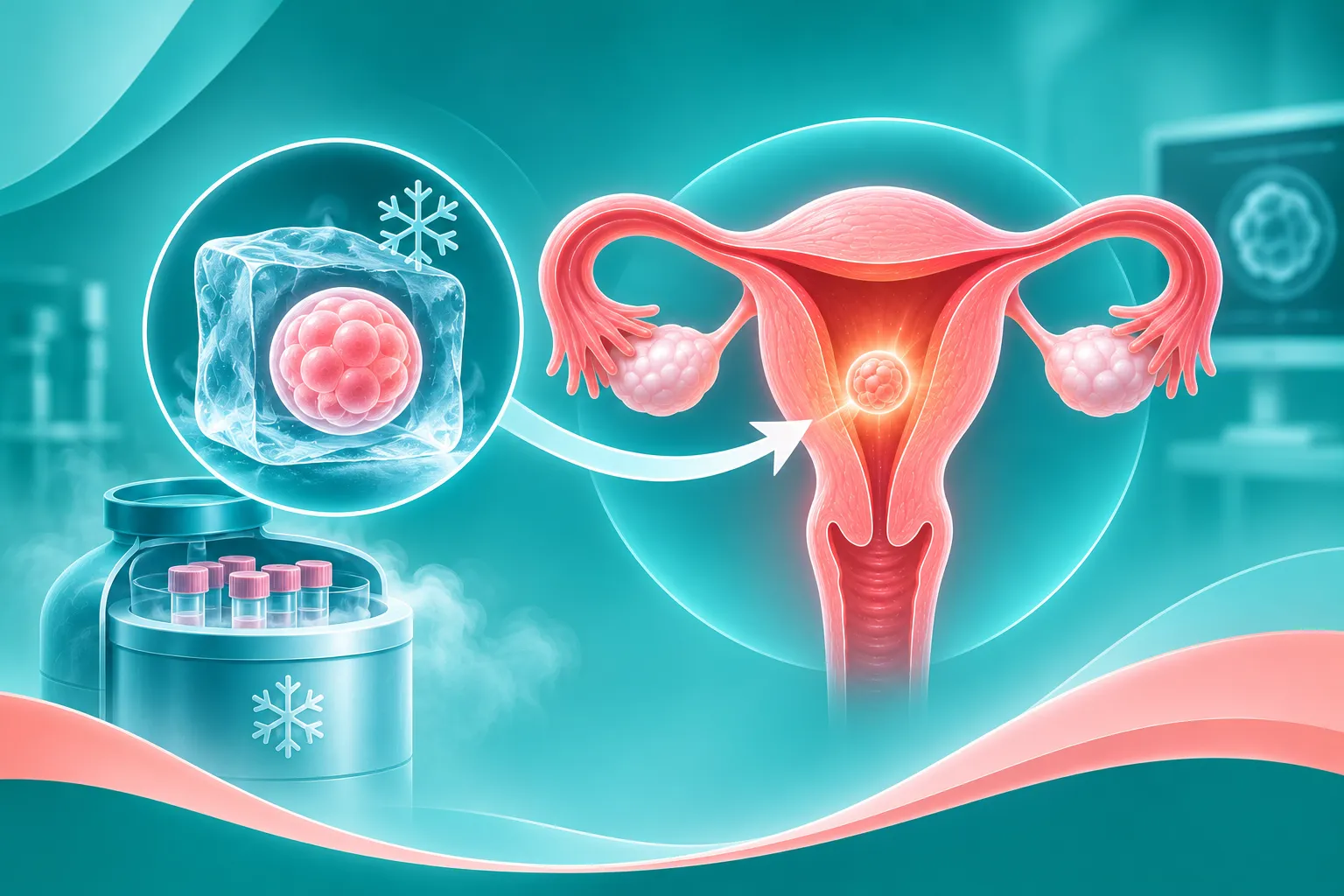
A carefully planned cycle to prepare the uterus, thaw a previously frozen embryo and transfer it at the appropriate time. Dr. Manjunath provides personalised FET planning in Bangalore, based on your cycle pattern, medical history, embryo details and fertility goals.
- Personalised Cycle Planning
- Endometrial Monitoring
- Coordinated Embryology Care
- Clear Follow-Up Guidance
Using a Frozen Embryo for Your Next Step Towards Pregnancy
Frozen embryo transfer, commonly called FET, is an assisted-reproduction procedure in which an embryo created during an earlier IVF or ICSI cycle is thawed and transferred into the uterus. The embryo may have been frozen after a previous fresh transfer, during a planned freeze-all cycle, after fertility preservation or before treatment for a medical condition.
Unlike a complete IVF stimulation cycle, an FET cycle usually does not require egg-retrieval surgery. The main goal is to prepare the uterine lining and coordinate the transfer with the embryo’s stage of development.
Dr. Manjunath provides personalised frozen embryo transfer planning in Bangalore. The approach may use the patient’s natural ovulation or prescribed hormones, depending on cycle regularity, medical considerations, treatment history and preference.
FET at a glance
| Previously frozen embryo | FET uses an embryo that was previously created and cryopreserved. |
|---|---|
| Laboratory thawing | The embryo is thawed in the embryology laboratory before transfer. |
| Thaw survival | Not every embryo survives thawing or remains suitable for transfer. |
| Pregnancy outcome | FET does not guarantee implantation or pregnancy. |
| Embryo number | Single-embryo transfer is generally preferred when clinically appropriate to reduce multiple-pregnancy risk. |
What Is a Frozen Embryo Transfer?
During IVF or ICSI, embryos may be cryopreserved—most commonly using rapid freezing called vitrification—and stored for future treatment. In an FET cycle, the uterus is prepared while the embryology team confirms the embryo plan and timing. At the appropriate stage, the selected embryo is thawed, assessed and placed inside the uterus using a thin catheter.
FET is different from embryo freezing:
- Embryo freezing is the laboratory process of cryopreserving and storing an embryo.
- Frozen embryo transfer is the later treatment cycle in which the uterus is prepared and a thawed embryo is transferred.
Embryos may have been frozen at the cleavage stage or blastocyst stage. The transfer timing is matched to the embryo’s developmental stage and the patient’s ovulation or progesterone exposure.
Who May Consider FET?
Frozen embryo transfer may be considered when:
- Good-quality embryos remain after an earlier IVF or ICSI cycle
- A freeze-all strategy was chosen to reduce medical risk or optimise timing
- Embryo transfer was postponed because the uterine lining, hormone levels or health circumstances were not suitable
- Embryos were frozen for fertility preservation before medical treatment or for future family building
- A patient is planning another pregnancy using embryos from an earlier cycle
- Embryos underwent preimplantation genetic testing and were cryopreserved while results were awaited
- Donor-egg, donor-embryo or gestational-carrier treatment is planned, subject to applicable law and consent
Suitability is confirmed only after reviewing the embryo records, consent status, uterine health and the patient’s current medical condition.
Types of FET Cycles
Natural-Cycle FET
A natural-cycle FET may be suitable for patients who ovulate predictably. Ultrasound and, when needed, urine or blood hormone tests are used to identify ovulation. The transfer is then timed according to ovulation and the age of the embryo.
Modified Natural-Cycle FET
In a modified-natural cycle, follicle development is monitored and medication may be used to help control the timing of ovulation. Luteal support may also be prescribed depending on the protocol.
Programmed or Hormone-Prepared FET
A programmed FET uses prescribed hormones to prepare the uterine lining and schedule the transfer without relying on spontaneous ovulation. This may be considered for irregular or absent ovulation, scheduling needs or other clinical reasons.
Individualised or Stimulated FET
Selected patients may require a mild-stimulation or other individualised protocol. The doctor chooses this only when the expected benefits justify the medication and monitoring.
No single protocol is best for everyone. The choice should consider cycle regularity, previous response, medical history, convenience, medication exposure and clinic scheduling. Medicines must be taken only as prescribed; timing errors may affect the transfer window.
Evaluation Before FET
What the team reviews
Before treatment begins, the fertility team may review:
- Medical, fertility, pregnancy and treatment history
- Menstrual-cycle pattern and ovulation history
- Embryo number, stage, grading, freezing method and storage records
- Previous embryo-transfer outcomes
- Current medicines, supplements, allergies and health conditions
- Uterine-cavity and endometrial findings
- Required infectious-disease screening and consent documentation
- Preconception health, including blood pressure and chronic-condition control
Tests based on clinical need
- Baseline pelvic ultrasound
- Hormone tests based on the planned protocol
- Pregnancy testing before cycle medication when indicated
- Saline sonography, hysteroscopy or other uterine-cavity assessment if there is a relevant concern
- Thyroid, glucose or other health assessment when clinically appropriate
Routine tests and add-on procedures should not be ordered without a clear reason. Ask what each recommended test may change in your treatment plan.
Frozen Embryo Transfer Process Step by Step
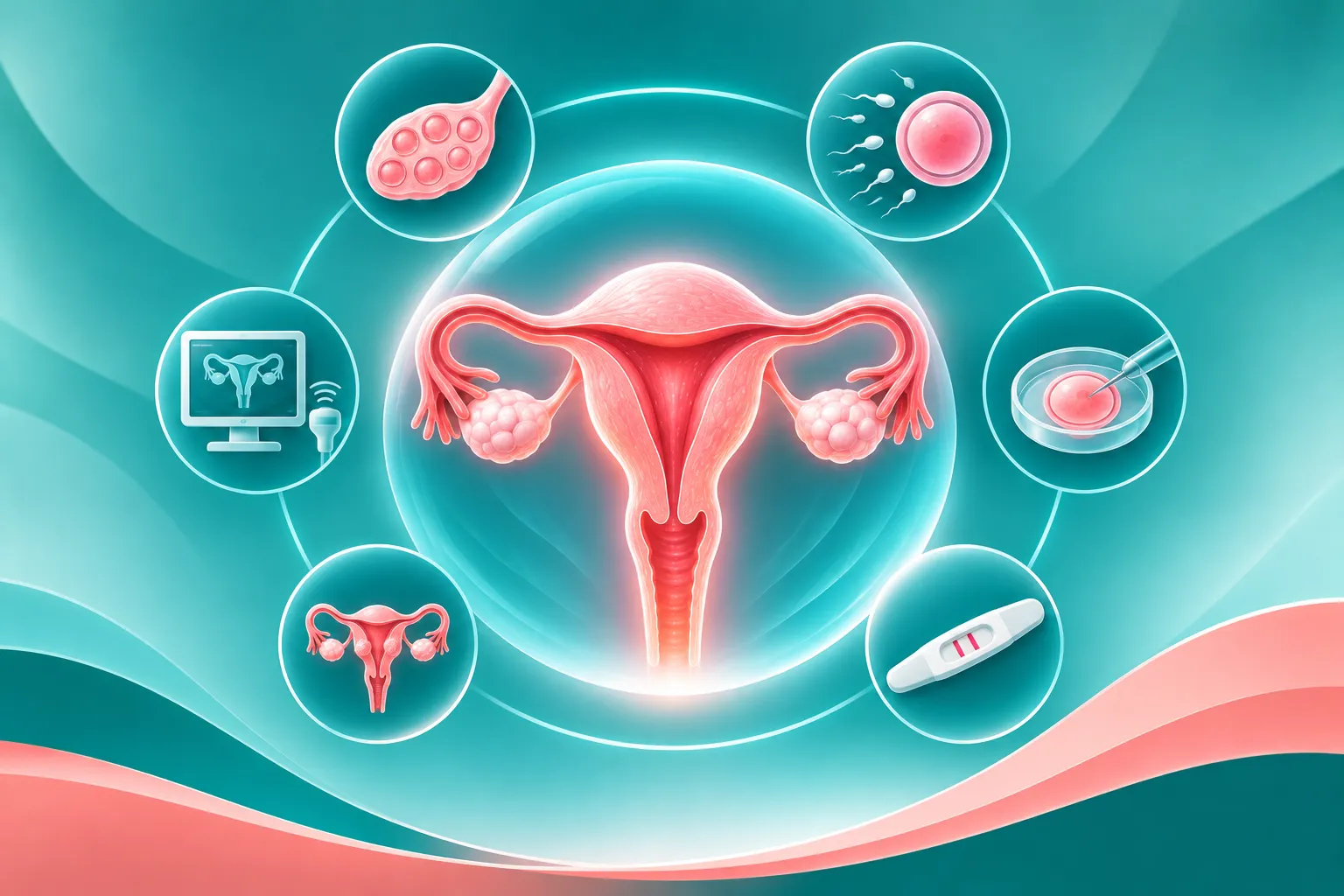
From your first consultation to your pregnancy test, each stage is planned around your chosen cycle protocol.
FET procedure in detail
Consultation and Embryo-Record Review
The doctor reviews your health, previous IVF cycle and available embryo information. The team confirms identity, storage, consent and the planned embryo-selection approach.
Choose the Cycle Protocol
A natural, modified-natural or programmed cycle is selected. You receive a calendar explaining monitoring, medicines and important dates.
Prepare and Monitor the Endometrium
Ultrasound is used to assess the uterine lining and, depending on the protocol, follicular development. Hormone tests may be added when they will guide timing or treatment.
Start Progesterone or Confirm Ovulation
The transfer date is coordinated with ovulation or the start of progesterone. Follow the exact prescribed time and route; do not change or stop medication without contacting the clinic.
Embryo Thawing and Assessment
The embryologist thaws the selected embryo according to the treatment plan and checks whether it has survived and is suitable for transfer. Occasionally, an embryo does not survive thawing or is unsuitable, and another embryo may be considered if available and consented.
Embryo Transfer
The embryo is loaded into a soft catheter and gently placed inside the uterus, often with ultrasound guidance. The procedure is usually brief and generally does not require anaesthesia, although individual circumstances may differ.
Post-Transfer Medication and Instructions
Continue every prescribed medicine exactly as directed. Normal gentle daily activity is usually possible; prolonged bed rest has not been shown to improve success. Follow the clinic’s individual advice about exercise, work, travel and sexual activity.
Pregnancy Test and Follow-Up
Complete the blood pregnancy test on the date provided by the clinic. Testing too early can be misleading. If positive, further blood tests or an ultrasound may be arranged. If negative, do not stop medication until instructed and schedule a review.
Preparing for Your Transfer
Before the cycle:
- Take folic acid or a prenatal supplement as advised
- Review all medicines and supplements with the doctor
- Avoid smoking, recreational drugs and alcohol when trying to conceive
- Manage diabetes, thyroid disease, hypertension and other health conditions
- Follow a balanced eating pattern, regular activity and adequate sleep
- Attend scans and blood tests at the scheduled time
- Ask the clinic what to do if a medication dose is late or missed
On transfer day:
- Follow the instructions about food and fluids
- Arrive with the bladder preparation requested by the clinic
- Bring identification and complete any required consent checks
- Take scheduled medicines unless told otherwise
- Avoid perfumes or strongly scented products if requested by the laboratory
After transfer, there is no special food, sleeping position or home remedy proven to make an embryo implant. Seek advice before using herbal products or non-prescribed medication.
How Many Embryos Should Be Transferred?
The decision considers patient age, embryo stage and quality, whether genetic testing was performed, previous treatment and relevant clinical guidance. For many patients, elective single-embryo transfer provides the safest balance by reducing twin and higher-order multiple pregnancies.
Transferring more embryos does not guarantee success and can increase health risks for the pregnant patient and babies. Endometrial thickness alone is not a reason to transfer two embryos instead of one. The final plan should be discussed before the embryo is thawed and documented through informed consent.
FET Success Factors
The likelihood of pregnancy and live birth may be influenced by:
- Age when the eggs were collected
- Embryo developmental stage and laboratory assessment
- Embryo chromosome status when valid testing was performed
- Survival and development after thawing
- Uterine-cavity and endometrial factors
- Timing of ovulation or progesterone exposure
- Previous reproductive and transfer history
- General and preconception health
- Embryology laboratory and transfer quality systems
Success should be reported using a defined outcome, such as clinical pregnancy or live birth per embryo transfer. Ask whether a clinic statistic applies to your age, embryo type and treatment circumstances. No clinic can ethically promise implantation, pregnancy or a healthy birth.
Benefits and Limitations
Potential Benefits
- Uses embryos already created, avoiding another egg-retrieval procedure for that attempt
- Can allow the body time to recover after ovarian stimulation
- Provides flexibility when a fresh transfer is not appropriate
- Supports future sibling attempts using embryos created at the earlier egg age
- May allow single-embryo transfer while preserving other embryos for later use
Important Limitations
- Not every embryo survives the freeze-thaw process
- A surviving embryo may not implant
- Treatment still requires monitoring, precise timing and medication in many cycles
- Pregnancy loss or ectopic pregnancy can still occur
- Stored embryos may not be available for use if consent or legal requirements are not satisfied
- Additional treatment may be needed after an unsuccessful cycle
Risks and When to Contact the Clinic
FET is generally less invasive than ovarian stimulation and egg retrieval, but it is not risk-free. Possible concerns include:
- Failure of an embryo to survive thawing
- Cycle cancellation or postponement because ovulation, hormone timing or the lining is not appropriate
- Medication side effects
- Difficult or occasionally unsuccessful catheter placement
- Infection or bleeding, which are uncommon
- Multiple pregnancy if more than one embryo is transferred or an unusual natural conception occurs
- Ectopic or heterotopic pregnancy
- Miscarriage or other pregnancy complications
- Emotional stress associated with treatment and waiting
Contact the clinic urgently for severe or one-sided abdominal pain, heavy bleeding, fainting, breathing difficulty, fever or other concerning symptoms. Emergency symptoms require immediate medical care.
Why Choose Dr. Manjunath for FET Care?
Care that connects previous IVF records, cycle planning, embryology and follow-up.
- Personalised selection of natural, modified-natural or programmed cycles
- Review of previous IVF and embryo records before treatment
- Coordinated clinical, ultrasound and embryology planning
- Clear medication calendar and transfer-day instructions
- Focus on safe embryo-transfer decisions and informed consent
- Follow-up after the pregnancy test, regardless of the result
- Access to broader fertility evaluation and treatment when required
Frequently asked questions
Most patients describe embryo transfer as mild discomfort similar to a cervical screening procedure. A full bladder may feel uncomfortable. Anaesthesia is not routinely required, but the doctor can discuss individual needs.
The timeline depends on whether the cycle is natural or hormone-prepared and on the embryo stage. Monitoring commonly begins early in the menstrual cycle, but your clinic will provide a personalised calendar.
No. Modern vitrification can provide high survival in experienced laboratories, but no embryo-survival rate is 100%. The embryologist assesses the embryo after thawing and explains the next step if it is unsuitable.
Neither approach is universally better for every patient. Outcomes depend on age at egg collection, embryo factors, diagnosis and treatment circumstances. A freeze-all strategy is useful for specific clinical reasons but should not be presented as automatically superior for everyone.
A natural FET coordinates transfer with spontaneous ovulation. A programmed or medicated FET uses prescribed hormones to prepare the uterine lining and schedule transfer. Cycle regularity, medical history and preference help determine the choice.
Many patients can return to usual light activities and work. Prolonged bed rest is generally unnecessary. Follow personalised advice if your work involves heavy physical effort or another medical consideration.
Routine movement, walking, coughing or using the toilet does not cause the embryo to fall out. The embryo is placed inside the uterine cavity and is microscopic.
Test only on the date given by the clinic, usually with a blood test. Testing early may produce an inaccurate or confusing result, particularly when fertility medication has been used.
Continue progesterone and all other prescribed medicines until the clinic tells you to change or stop them—even if you notice spotting or obtain a home-test result.
Light spotting can occur for several reasons and does not confirm either success or failure. Contact the clinic for advice. Seek urgent care for heavy bleeding, severe pain, dizziness or fainting.
The risk is much higher when more than one embryo is transferred. Identical twinning can rarely occur even after a single-embryo transfer. Your doctor will discuss the safest number of embryos for your circumstances.
No. Preimplantation genetic testing can provide particular information about an embryo, but it cannot guarantee implantation, pregnancy or a healthy baby. Testing also has limitations that should be discussed with a fertility specialist or genetic counsellor.
Embryos may remain in storage, be used in a later consented cycle or be managed according to the patients’ documented choices and applicable law. Consent, storage periods and fees should be reviewed with the clinic.
For educational information only; not a substitute for individual medical advice.
.webp)